Surrogacy Cost in Mandya 2026 | Low-Cost Govt Approved Centres
At a Glance: Surrogacy Cost in Mandya (2026)
- Total Estimated Cost: ₹15 Lakh to ₹25 Lakh
- Legal Framework: Only altruistic surrogacy is permitted in India under the Surrogacy (Regulation) Act, 2021. Commercial surrogacy is strictly prohibited.
- Type of Surrogacy: Only gestational surrogacy is legal, meaning the surrogate mother has no genetic link to the child.
- Eligibility for Intending Parents: Indian citizens, married for at least five years (wife 23-50, husband 26-55), or single Indian women (widows/divorcees 35-45) medically certified as infertile, with at least one parent genetically related to the child.
- Eligibility for Surrogate Mother: A close relative of the intending couple, married, with her own child, aged 25-35, medically and psychologically fit, and can be a surrogate only once.
What is Altruistic Surrogacy and How Does it Work in India?
Altruistic surrogacy is a medical arrangement where a woman (the surrogate mother) carries a pregnancy for another couple (the intending or commissioning parents) without receiving any monetary compensation beyond her medical expenses and insurance coverage. This contrasts with commercial surrogacy, which is strictly prohibited in India under the Surrogacy (Regulation) Act, 2021. The process is typically gestational surrogacy, meaning the surrogate mother has no genetic link to the child she carries.
Key aspects of altruistic surrogacy in India include:
- Gestational Surrogacy Only: The embryo is created using the intending parents' gametes (sperm and egg) or donor gametes, then transferred to the surrogate's uterus. The surrogate does not contribute her own eggs.
- Legal Framework: The Surrogacy (Regulation) Act, 2021, along with the Assisted Reproductive Technology (Regulation) Act, 2021, regulates all aspects of surrogacy in India, ensuring ethical practices and protecting the rights of all parties involved. India is a preferred destination for many eligible couples due to the advanced medical infrastructure and comprehensive care available through ART clinics registered with the ICMR (Indian Council of Medical Research).
- Eligibility for Intending Parents: To opt for altruistic surrogacy in India, intending parents must be Indian citizens, married for at least five years, and medically certified as infertile. The wife must be between 23-50 years and the husband between 26-55 years. Single Indian women who are widows or divorcees, aged between 35 and 45 years, are also eligible. Single men, live-in couples, or foreign citizens are not eligible.
- Surrogate Mother Eligibility: The surrogate must be a close relative of the intending couple, a married woman with a child of her own, aged between 25-35 years, and medically and psychologically fit. She can only be a surrogate once in her lifetime.
- ICMR and ART-Registered Clinics: All surrogacy procedures must be carried out in clinics registered with the National Assisted Reproductive Technology and Surrogacy Board (NARTSB) and follow guidelines from the Indian Council of Medical Research (ICMR). This ensures adherence to high medical and ethical standards.
Understanding these legal and medical frameworks is crucial for anyone considering surrogacy in Mandya, ensuring a transparent and compliant journey towards parenthood.
What is Surrogacy?
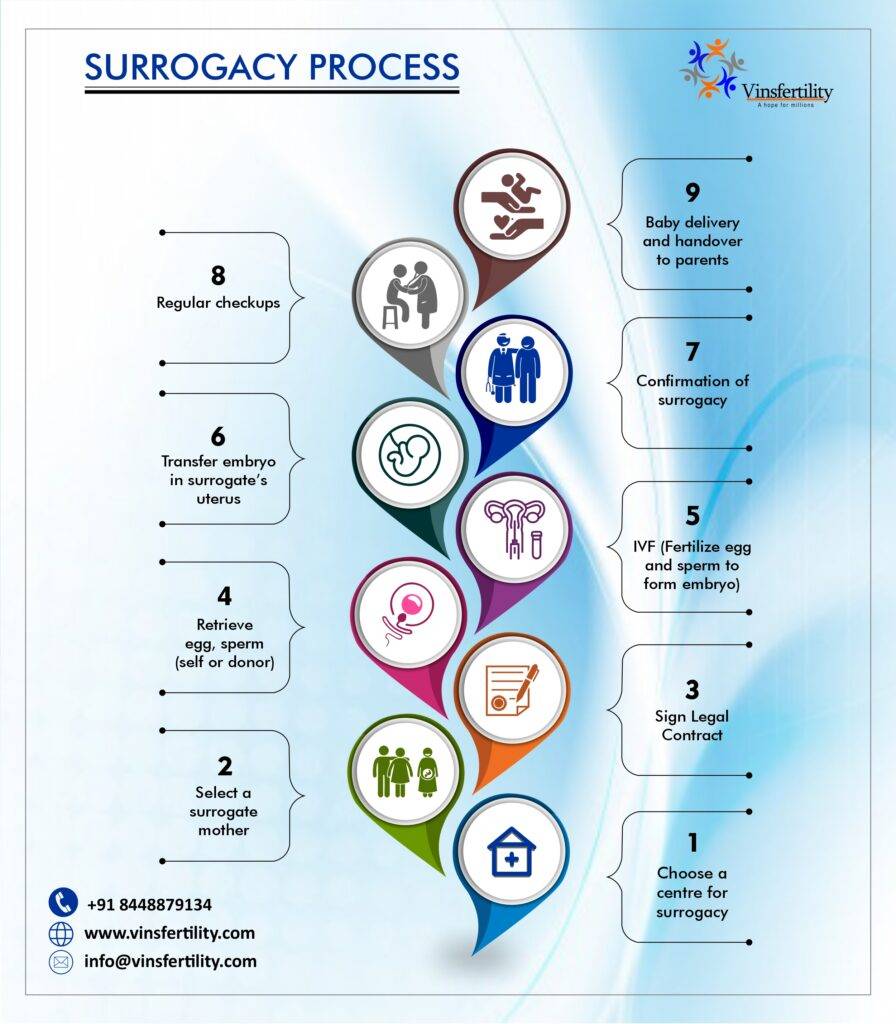
Surrogacy is a medical arrangement where a woman, known as the gestational carrier or surrogate mother, agrees to carry a pregnancy for another individual or couple (the intended parents). In this process, an embryo, typically created using the intended parents' (or donor's) egg and sperm through In Vitro Fertilization (IVF), is transferred into the surrogate's uterus. The surrogate carries the pregnancy to term and, upon birth, hands over the child to the intended parents, as outlined in a legally binding agreement.
Why do people opt for Surrogacy?
Intended parents consider surrogacy for various medical and personal reasons, particularly when conventional methods of conception and pregnancy are not viable or safe. Some common reasons include:
- Uterine Issues: When the intended mother is unable to carry a pregnancy due to medical conditions affecting the uterus, such as a hysterectomy, uterine abnormalities, or recurrent pregnancy loss.
- Infertility: Cases of severe male or female infertility where medical interventions like IVF have been unsuccessful, or where carrying a pregnancy poses significant health risks. A certificate of essentiality and infertility from a District Medical Board is required, confirming that the intended mother has a medical condition necessitating surrogacy. Learn more about infertility from Mayo Clinic.
- Advanced Maternal Age: While some women can conceive later in life, advanced maternal age (typically after 37-38) can increase risks during pregnancy and may lead some to consider surrogacy.
- Single Parenthood: Eligible single Indian women (widows or divorcees aged 35-45) who wish to have a child may opt for surrogacy.
Eligibility Criteria for Intended Parents in India
According to the Surrogacy (Regulation) Act, 2021, specific criteria must be met for intended parents to pursue altruistic surrogacy in India:
- Marital Status: The intended parents must be a legally married Indian heterosexual couple. Single individuals are also eligible if they are Indian women who are either widows or divorcees, aged between 35 and 45 years.
- Age Limits: For married couples, the wife must be between 23 and 50 years old, and the husband between 26 and 55 years old. A common clinical guideline also suggests that the combined age of the intended parents should not exceed 100 years.
- Medical Necessity: A certificate of essentiality and infertility from a District Medical Board is required, confirming that the intended mother has a medical condition necessitating surrogacy.
- Genetic Relation: At least one of the intended parents must be genetically related to the child.
What is the Most Common Type of Surrogacy?
Gestational Surrogacy: This is the most common and, significantly, the only legally permitted type of surrogacy in India under the Surrogacy (Regulation) Act, 2021. In gestational surrogacy, the embryo is created using the intended parents' (or donor's) gametes via In Vitro Fertilization (IVF) and then transferred to the surrogate mother's uterus. This method ensures that the child is not biologically related to the surrogate mother, as her own eggs are not used. This clear genetic separation helps prevent complex legal and emotional issues regarding parentage.
Why is Gestational Surrogacy becoming more common these days?
Gestational surrogacy has become the preferred and legally mandated method primarily to ensure there is no biological connection between the surrogate mother and the child. This distinction is crucial for establishing clear legal parentage and avoiding the ethical dilemmas that can arise when a surrogate uses her own egg (known as traditional surrogacy). By using the intended parents' or donor's genetic material, gestational surrogacy legally and ethically simplifies the process, making it more secure for all parties involved.
Who is a Surrogate Mother?
A surrogate mother is a woman who, driven by altruistic motives, agrees to carry a pregnancy for intended parents. She carries the baby for the full nine-month term and, after giving birth, hands over the child to the intended parents, as per the legal agreement and the provisions of the Surrogacy (Regulation) Act, 2021. Her role is vital in helping individuals and couples achieve their dream of parenthood.
Eligibility Criteria for a Surrogate Mother in India
The Surrogacy (Regulation) Act, 2021, sets strict criteria for a woman to become a surrogate mother in India, ensuring her well-being and the ethical conduct of the process:
- Relationship: She must be a close relative of the intended parents.
- Marital Status: She must be a married woman.
- Age: She must be between 25 and 35 years of age.
- Maternity History: She must have her own biological child.
- Health: She must be medically and psychologically fit to carry a pregnancy, with a certificate from a registered medical practitioner. Learn more about health during pregnancy from Mayo Clinic.
- Gamete Contribution: She cannot provide her own gametes for the surrogacy.
- Previous Surrogacy: A woman can only be a surrogate once in her lifetime.
- Insurance: She must have comprehensive general health insurance coverage for a period of 36 months, covering postpartum delivery complications.
What are the Sources of Gametes and Embryos for Gestational Surrogacy?
While gestational surrogacy is the legally permitted method, the genetic material used to create the embryo can come from various sources, depending on the intended parents' medical needs and preferences. These options include:
- Surrogacy with Own Eggs and Sperm: Using the eggs and sperm of the intended parents.
- Surrogacy with Donor Eggs: Using donor eggs if the intended mother cannot produce viable eggs, combined with the intended father's sperm.
- Surrogacy with Donor Sperm: Using donor sperm if the intended father cannot produce viable sperm, combined with the intended mother's eggs.
- Surrogacy with Donor Eggs and Sperm: Using both donor eggs and donor sperm, typically when both intended parents have fertility issues or are single parents.
- Surrogacy with Frozen Embryos: Using embryos that were previously created and cryopreserved by the intended parents.
- Surrogacy with Frozen Eggs: Using eggs that were previously retrieved and frozen by the intended mother.
How Much Does Surrogacy Cost in Mandya (2026)?
In Mandya, Karnataka, the estimated cost for altruistic surrogacy typically ranges from ₹15 Lakh to ₹25 Lakh for a complete journey. This range covers medical procedures, the surrogate mother's medical expenses, insurance, support, legal processes, and other essential services, adhering strictly to India's Surrogacy (Regulation) Act, 2021, which mandates altruistic arrangements. All figures are estimates for human review.
Factors Influencing Surrogacy Cost in Mandya
The overall cost of altruistic surrogacy in Mandya can be influenced by several factors, including:
- Clinic Reputation and Success Rates: Highly reputable clinics with established success rates and experienced fertility specialists may have different fee structures.
- Medical Procedures Required: The complexity of the IVF process, number of embryo transfers needed, and any specific medical treatments for the intended parents or surrogate.
- Donor Programs: If donor eggs or sperm are required, this will add to the overall cost.
- Advanced Genetic Testing: Procedures like Preimplantation Genetic Screening (PGS) or Preimplantation Genetic Diagnosis (PGD) to check embryos for chromosomal abnormalities or specific genetic disorders.
- Cryopreservation: Costs associated with freezing and storing embryos or gametes.
- Surrogate Mother's Medical Expenses: All medical expenses related to the surrogate's pregnancy, including antenatal care, delivery, and postnatal care, are covered.
- Insurance Coverage: The cost of the mandatory general health insurance for the surrogate mother for 36 months.
- Legal and Administrative Fees: Expenses for legal agreements, counselling, and administrative processes required by the Surrogacy (Regulation) Act, 2021.
It is essential to have a detailed discussion with your chosen fertility clinic in Mandya to receive a transparent breakdown of all anticipated costs, ensuring clarity on what is included in the estimated package.
| Surrogacy Procedure Component | Estimated Cost Range (INR) |
| Complete Surrogacy Package (using intended parents' own eggs & sperms) | ₹15 Lakh to ₹25 Lakh |
| Complete Surrogacy Package (with donor eggs and intended father's sperms) | ₹18 Lakh to ₹28 Lakh |
| Complete Surrogacy Package (with donor sperms and intended mother's eggs) | ₹18 Lakh to ₹28 Lakh |
| Surrogate Mother's Medical Expenses, Insurance & Support | ₹8 Lakh to ₹12 Lakh |
| IVF Procedure & Embryo Transfer (for intended parents) | ₹2.5 Lakh to ₹4.5 Lakh |
| Surrogate Mother Selection, Screening & Preparation | ₹1.5 Lakh to ₹2.5 Lakh |
| Mandatory Surrogate Mother Insurance | ₹50,000 to ₹1 Lakh |
| Normal Vaginal Delivery Cost | ₹50,000 to ₹1.5 Lakh |
| Cesarean Section (C-section) Delivery Cost | ₹2 Lakh to ₹4 Lakh |
| Housing & Food for Surrogate Mother (during gestation) | ₹2 Lakh to ₹4 Lakh |
| Caretaker, Cook & Maid Services for Surrogate Mother | ₹80,000 to ₹1.5 Lakh |
| Surrogate Mother's Post-Pregnancy Protein & Medication | ₹30,000 to ₹60,000 |
| Legal Documentation & Court Fees | ₹1 Lakh to ₹2 Lakh |
| Surrogate Mother's Post Embryo Transfer Medications | ₹20,000 to ₹50,000 |
| Donor Workup & Compensation (if applicable, for egg/sperm donor) | ₹50,000 to ₹1.5 Lakh |
| Post-Pregnancy Care, Scans & Travel Allowance for Surrogate Mother | ₹10,000 to ₹30,000 |
| Embryo Storage & Freezing (for 6 months) | ₹10,000 to ₹25,000 |
| PGD/PGS for Embryo Genetic Testing (for up to 10 embryos) | ₹2 Lakh to ₹4 Lakh |
Please note that these are estimated costs for altruistic surrogacy in Mandya for 2026. The final cost can vary based on individual medical needs, choice of clinic, and specific services required. It is essential to consult with an experienced fertility specialist to receive a personalized cost breakdown.
Vinsfertility Wishes the Best for You
At Vinsfertility, we are dedicated to helping you achieve your dream of parenthood through ethical and transparent means. We understand that each individual's journey is unique, which is why we provide tailored solutions and compassionate care. Our network includes ICMR and ART-registered clinics with NABL-accredited labs, ensuring high standards of quality and safety in Mandya.
We strive to be a beacon of hope, supporting you every step of the way towards building your family. Please remember that while we offer advanced fertility treatments, no ethical clinic can guarantee a pregnancy or live birth. For more details or to schedule a consultation, please contact us:
E-mail Id: info@vinsfertility.com
Phone No.: +91 8448879134
Frequently Asked Questions
Is surrogacy legal in India and who is eligible under the Surrogacy (Regulation) Act 2021?
Yes, altruistic surrogacy is legal in India under the Surrogacy (Regulation) Act, 2021. This law permits surrogacy only for infertile Indian married couples who meet specific criteria, including age limits (female 25-50, male 26-55) and a medical indication for surrogacy. The surrogate mother must be a close relative, married, between 35-45 years old, have her own child, and be medically and psychologically fit, and can only be a surrogate once. More details on the regulations can be found on the National ART and Surrogacy Portal.
What is the total surrogacy cost in Mandya and what affects it?
While specific costs in Mandya can vary between registered centres, the general range for altruistic surrogacy in India typically falls between INR 12 to 18 lakhs, as mentioned in the article. This range covers various components, including medical procedures like IVF and embryo transfer, the surrogate's medical care and expenses, legal documentation, and delivery costs. Factors such as the number of IVF cycles needed, specific medical complications, and the chosen clinic's fee structure can influence the final cost.
What success rates are realistic for surrogacy in Mandya and why can no clinic guarantee a live birth?
Surrogacy success rates, including in Mandya, are generally high but vary based on factors like the age and health of the intended parents, embryo quality, and the surrogate's health. While specific live birth rates can be promising, no clinic can guarantee a live birth due to the inherent biological complexities of pregnancy and potential unforeseen complications. Reputable clinics will provide their success rates based on live births per embryo transfer, aligning with general ART reporting standards from organizations like the World Health Organization.
How long does the surrogacy journey typically take in Mandya?
The entire surrogacy journey, from initial consultation and legal processes to the birth of the child, typically spans 18 to 24 months. This timeline includes comprehensive screening of both intended parents and the surrogate, legal agreement finalization, the IVF cycle for embryo creation, embryo transfer, the full nine months of pregnancy, and post-delivery procedures. Individual circumstances and the need for multiple embryo transfers can extend this duration.
What expenses are typically included in the total surrogacy cost in Mandya?
The total cost for altruistic surrogacy in Mandya generally includes several key components. These typically cover the medical procedures for the intended parents (like IVF and embryo creation), the surrogate mother's medical expenses throughout pregnancy, her nutrition and post-delivery care, legal fees for drafting and executing the surrogacy agreement, and the delivery costs. It also usually accounts for insurance coverage for the surrogate, as mandated by the Surrogacy (Regulation) Act, 2021, and regular medical check-ups.
Sources & References
- The Surrogacy (Regulation) Act, 2021 — Government of India
- Indian Council of Medical Research (ICMR) — National ART & Surrogacy Registry
- NABL — National Accreditation Board for Testing and Calibration Laboratories
- World Health Organization (WHO) — Infertility clinical guidance
- PubMed — Peer-reviewed fertility research (NIH/NLM)
All external sources link to primary government, medical, or peer-reviewed material. This article is reviewed by a qualified fertility specialist and updated as clinical guidance changes.