IVF Cost in Raipur (2026): Full Price Breakdown, Clinics & Doctors
In Raipur for 2026, the estimated cost for a standard In Vitro Fertilization (IVF) cycle typically ranges from ₹90,000 to ₹2,00,000. This range generally covers the core procedures of IVF treatment. However, the total expenditure for a complete IVF attempt can be significantly higher, often reaching between ₹2,50,000 and ₹4,50,000, particularly when advanced diagnostic tests, specialized medications, or additional laboratory techniques are required. Patients in Raipur and surrounding areas, including Bhilai, Durg, and Rajnandgaon, seek fertility services, and understanding these potential expenses is crucial for financial planning. IVF is a complex series of procedures used to help with fertility or prevent genetic problems and assist with the conception of a child. It involves retrieving eggs from a woman and a sperm sample from a man, and then manually combining them in a laboratory dish. The resulting embryo(s) are then transferred to the uterus. According to the World Health Organization (WHO), infertility affects millions of people globally, highlighting the importance of accessible and transparent fertility treatments.
What Does a Basic IVF Cycle Cost Include in Raipur?
A basic IVF cycle in Raipur typically encompasses several key stages, each contributing to the overall cost. Understanding these components helps in clarifying what the initial quoted price covers:
- Initial Consultation and Diagnostics: This includes preliminary meetings with the fertility specialist, physical examinations, and basic diagnostic tests for both partners. These tests might involve blood work, semen analysis, and ultrasound scans to assess fertility status.
- Ovarian Stimulation: Medications are administered to stimulate the ovaries to produce multiple eggs. This phase involves regular monitoring through blood tests and ultrasounds to track follicle development.
- Egg Retrieval: A minor surgical procedure performed under sedation to collect the mature eggs from the ovaries.
- Sperm Collection and Fertilization: Collection of a sperm sample, which is then processed and combined with the retrieved eggs in a laboratory to facilitate fertilization.
- Embryo Culture and Transfer: The fertilized eggs (embryos) are cultured in the lab for a few days before one or more healthy embryos are selected and transferred into the woman's uterus.
- Post-transfer Support: This may include certain medications to support the uterine lining after embryo transfer.
Factors Influencing IVF Cost in Raipur
The final cost of IVF treatment can vary significantly based on several key factors:
- Medication Costs: The type, dosage, and duration of fertility medications (e.g., hormones for ovarian stimulation) can vary greatly depending on the individual's response and specific protocol. These can constitute a substantial portion of the overall cost.
- Diagnostic Tests: Beyond the initial assessments, some patients may require advanced diagnostic tests such as hysteroscopy, laparoscopy, or specific genetic screenings, which add to the expense.
- Advanced Lab Add-ons:
- ICSI (Intracytoplasmic Sperm Injection): Often used for male factor infertility, this involves injecting a single sperm directly into an egg. The National Center for Biotechnology Information (NCBI) provides extensive research on its efficacy.
- PGT (Preimplantation Genetic Testing): Includes PGT-A (for aneuploidy screening), PGT-M (for monogenic/single gene defects), and PGT-SR (for structural rearrangements). These tests screen embryos for genetic abnormalities before transfer, increasing the chances of a healthy pregnancy, but significantly adding to the cost.
- Embryo Freezing (Cryopreservation): If multiple viable embryos are produced, freezing them for future cycles can incur additional charges.
- Donor Services: Using donor eggs, donor sperm, or donor embryos involves higher costs due to screening, compensation, and legal procedures.
- Number of Cycles: Many patients require more than one IVF cycle to achieve pregnancy, which directly multiplies the overall expense.
- Clinic Reputation and Doctor's Experience: Highly reputable clinics with experienced fertility specialists and advanced infrastructure may have higher fees compared to newer or smaller centers.
- Geographical Location: While this article focuses on Raipur, costs can sometimes vary slightly in nearby cities and towns like Bhilai or Durg. It is always advisable to compare options.
For a more detailed comparison of costs across different cities, you may refer to our guide on IVF treatment costs.
Why Raipur IVF Costs Sit in the Affordable-to-Mid Range of India's Price Band
Raipur, the capital of Chhattisgarh, has grown into a regional hub for fertility care over the past two decades, with several long-established test tube baby centres serving patients from across Chhattisgarh, and from neighbouring parts of Odisha, Madhya Pradesh, and Jharkhand. Because of this, couples do not always need to travel to a metro city such as Delhi, Mumbai, or Hyderabad for standard IVF treatment. The cost of IVF treatment in Raipur generally falls within the affordable-to-mid range when compared to larger metropolitan cities in India. For a basic IVF cycle, costs typically range from approximately ₹80,000 to ₹1,50,000, while more comprehensive treatments, including advanced procedures and medications, can extend up to ₹4,17,000. This makes Raipur an accessible option for many couples seeking fertility solutions.
-
Regional infrastructure and access: Raipur's developing medical infrastructure and lower operational costs, compared to major metro cities like Delhi or Mumbai, contribute to more competitive pricing for standard IVF cycles. While some highly specialized procedures or complex donor/surrogacy arrangements might still necessitate travel to larger cities, increasing overall expenses, Raipur effectively serves as a primary hub for standard fertility treatments in the region.
-
Technology and lab quality: The investment a fertility centre makes in state-of-the-art embryology labs, advanced imaging equipment, and stringent safety protocols directly influences the cost. Clinics with cutting-edge technology and superior infrastructure, which are crucial for optimal embryo development and higher success rates, will naturally have higher charges compared to those with more basic setups.
-
Doctor expertise and team size: The proficiency and experience of the IVF specialists, embryologists, and the entire medical team play a significant role. Centres with highly qualified, board-certified fertility doctors and dedicated, full-time embryology teams—who are vital for handling delicate procedures like egg fertilization and embryo culture—typically reflect this expertise in their professional fees.
-
Regulatory compliance: Adherence to national regulations, specifically the Assisted Reproductive Technology (Regulation) Act, 2021, mandates specific standards for equipment, infrastructure, and ethical oversight. Registered ART centres invest significantly to meet these requirements, ensuring patient safety, quality care, and transparent practices, which can influence the overall cost structure.
What a "Base Cycle" Price Does and Does Not Include
Included in a Typical Base IVF Cycle
-
Initial consultation and medical history review. This typically includes a review of your medical history, initial physical examinations, and a discussion of your fertility journey and treatment options with the fertility specialist.
-
Basic ovarian stimulation monitoring (ultrasounds, hormone tests). Regular monitoring through transvaginal ultrasounds and blood tests to track follicle growth and hormone levels, ensuring optimal timing for egg retrieval. This helps the medical team adjust medication dosages as needed. For more information on IVF procedures, you can consult resources from the American College of Obstetricians and Gynecologists (ACOG).
-
Egg retrieval procedure (including basic theatre/anesthesia charges). A minor surgical procedure performed under light sedation to collect eggs from the ovaries using a thin needle guided by ultrasound. This cost usually covers the procedure room and basic anesthesia fees.
-
Sperm preparation. Processing of a sperm sample (from the male partner or donor) in the laboratory to select the healthiest and most motile sperm for fertilization.
-
Standard fertilisation (IVF) in the lab. The process where sperm and eggs are combined in a petri dish to allow natural fertilization to occur, creating embryos.
-
Embryo culture and embryo transfer into the uterus. Embryo culture involves monitoring the development of embryos in a specialized incubator for several days (typically 3-5 days). Embryo transfer is the final step, where one or more selected embryos are carefully placed into the woman's uterus using a thin catheter, aiming for implantation.
Common Exclusions from a Base IVF Cycle
-
Hormone medications and injections (₹30,000–₹80,000+ depending on age and protocol). These essential medications, including gonadotropins (FSH, LH), GnRH agonists/antagonists, and progesterone, stimulate the ovaries to produce multiple eggs and support the uterine lining. The cost varies significantly based on the woman's age, ovarian reserve, and the specific protocol prescribed, ranging from ₹30,000 to ₹80,000 or more per cycle. For more details on IVF medications, refer to the Mayo Clinic.
-
Advanced fertilisation techniques such as ICSI, IMSI or PICSI. These specialized procedures are used when male factor infertility is present or previous IVF cycles have failed:
- Intracytoplasmic Sperm Injection (ICSI): Involves injecting a single sperm directly into each egg to facilitate fertilization.
- Intracytoplasmic Morphologically Selected Sperm Injection (IMSI): A more advanced version of ICSI that uses high-magnification microscopy to select sperm with the most normal morphology.
- Physiological ICSI (PICSI): Selects sperm based on their ability to bind to hyaluronic acid, mimicking natural selection. For general information on IVF techniques, consult ACOG guidelines.
-
Embryo freezing and annual storage charges. If extra viable embryos are produced, they can be cryopreserved (frozen) for future use, avoiding the need for another full IVF cycle. This incurs separate freezing fees and annual storage charges.
-
Preimplantation Genetic Testing (PGT) costs. Genetic testing of embryos before transfer can identify chromosomal abnormalities (PGT-A for aneuploidy), specific genetic disorders (PGT-M for monogenic diseases), or structural chromosomal rearrangements (PGT-SR). These tests are elective and add to the overall cost, typically performed for specific indications. The ACOG provides guidance on PGT.
-
Donor egg, donor sperm, or donor embryo services. When a couple requires the use of donor gametes (eggs or sperm) or donor embryos due to specific infertility factors, there are additional costs associated with donor screening, compensation, and procurement.
-
Additional diagnostic tests such as hysteroscopy or sperm DNA fragmentation. Depending on the individual's medical history, additional diagnostic procedures may be recommended to investigate underlying fertility issues. Examples include hysteroscopy (to examine the uterus) or sperm DNA fragmentation analysis (to assess sperm quality), which are billed separately. Information on procedures like hysteroscopy can be found on ACOG.
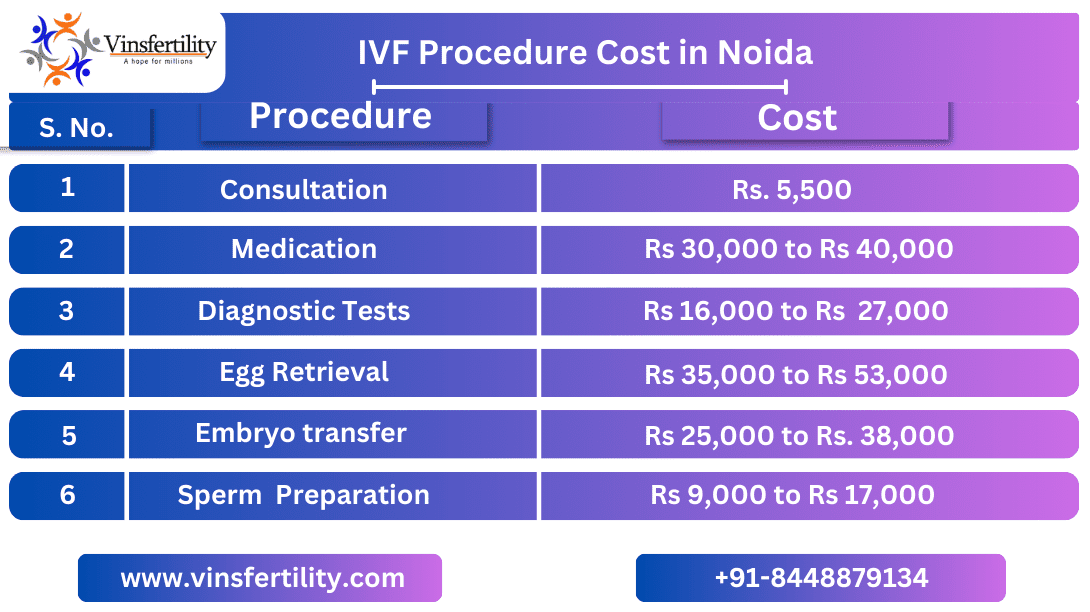
Full IVF Cost Breakdown in Raipur: Every Line Item Explained
Hidden Costs Most Clinics Don't Advertise Upfront
-
Advanced diagnostic tests that may be recommended after initial assessments (e.g., karyotyping for genetic screening, hysteroscopy to examine the uterus, or Endometrial Receptivity Analysis - ERA).
-
Anesthesia for additional minor procedures or repeat egg retrievals, if required due to unforeseen circumstances.
-
Legal fees related to donor agreements, surrogacy contracts, or other third-party reproduction arrangements, which are separate from medical costs.
-
Extended or specialized counselling sessions, including psychological support, which can be crucial for emotional well-being throughout the IVF journey.
-
Emergency management costs, such as hospitalisation for complications like Ovarian Hyperstimulation Syndrome (OHSS). Mayo Clinic provides detailed information on OHSS.
-
Travel and accommodation expenses, particularly for patients travelling from outside Raipur for treatment.
Sources & References
- The Surrogacy (Regulation) Act, 2021 — Government of India
- Indian Council of Medical Research (ICMR) — National ART & Surrogacy Registry
- NABL — National Accreditation Board for Testing and Calibration Laboratories
- World Health Organization (WHO) — Infertility clinical guidance
- PubMed — Peer-reviewed fertility research (NIH/NLM)
All external sources link to primary government, medical, or peer-reviewed material. This article is reviewed by a qualified fertility specialist and updated as clinical guidance changes.