IVF Cost in Belgaum – Rs. 1,00,000 to Rs. 2,50,000 | Test Tube Baby Price 2026 | Govt Approved Low Cost IVF Centres - Vinsfertility
What Does IVF Cost in Belgaum in 2026?
Key Takeaways: IVF Cost in Belgaum
- A single IVF cycle in Belgaum (Belagavi) for 2026 typically ranges from ₹1,00,000 to ₹2,50,000.
- This cost varies significantly based on treatment protocols, required medications, and additional specialized procedures.
- A "base cycle" generally includes consultation, monitoring, egg retrieval, standard fertilization, and embryo transfer.
- Medications are a major variable, costing anywhere from ₹50,000 to over ₹1,20,000, influenced by age and ovarian response.
- Common exclusions from the base price include advanced techniques (like ICSI), embryo freezing, Preimplantation Genetic Testing (PGT), and donor services.
In Vitro Fertilization (IVF) is an advanced assisted reproductive technology (ART) used to help individuals or couples conceive. It involves fertilizing an egg with sperm outside the body in a laboratory. The resulting embryo is then carefully transferred into the woman's uterus with the aim of establishing a pregnancy. For a comprehensive understanding of the procedure, you can refer to the Mayo Clinic's guide on IVF.
In and around Belgaum, Karnataka, for 2026, the estimated cost for a single IVF cycle typically ranges from ₹1,00,000 to ₹2,50,000. This range reflects the variability in treatment protocols, the specific medications required, and any additional specialized procedures that may be necessary, such as Intracytoplasmic Sperm Injection (ICSI) or Preimplantation Genetic Diagnosis (PGD).
Belgaum, also known as Belagavi, serves as a significant healthcare hub for North Karnataka and the border districts of Maharashtra. Its growing medical infrastructure includes a mix of established standalone fertility clinics and branches of reputable national IVF chains. This draws patients seeking fertility treatments from nearby areas like Khanapur, Bailhongal, Gokak, Chikodi, and neighbouring parts of Maharashtra.
This comprehensive guide from Vinsfertility aims to clarify the expected expenses associated with IVF treatment in Belgaum and detail the various factors that influence these costs, helping you make informed decisions on your fertility journey.
Why are IVF Costs in Belgaum Mid-Range Compared to Other Indian Cities?
Belgaum (Belagavi), a rapidly developing educational and commercial hub in North Karnataka, attracts couples from across the region seeking high-quality fertility care without the need to travel to larger metropolitan cities like Bengaluru, Pune, or Hubballi. The city offers a balanced environment for IVF costs, positioning them in the mid-range compared to other major Indian cities. This is due to a blend of established local fertility and laparoscopy centers, combined with branches of leading national IVF chains, providing patients with a genuine choice between standalone clinics and hospital-attached care. This competitive landscape, along with a robust local infrastructure, helps stabilize pricing.
- Regional infrastructure and access: While Belgaum provides comprehensive care, some couples may still travel to larger cities like Hubballi or Pune for highly specialized second opinions or access to more advanced Assisted Reproductive Technology (ART) laboratories, which can add to their overall costs (treatment plus travel and accommodation).
- Technology and lab quality: Fertility centers that invest in state-of-the-art embryology labs, advanced incubator monitoring systems, and electronic witnessing systems for enhanced safety and success rates typically have higher overheads, which are reflected in their pricing compared to basic setups.
- Doctor expertise and team size: The fees associated with highly experienced IVF specialists, reproductive endocrinologists, and a dedicated, full-time embryology team contribute significantly to professional costs. Their expertise is crucial for successful outcomes.
- Regulatory compliance: Adherence to the stringent guidelines of the ART (Regulation) Act, 2021, and achieving registered ART centre status requires substantial investment in specialized equipment, trained personnel, and robust ethical oversight. This commitment to legal and ethical standards ensures patient safety and quality of care, influencing the overall cost structure.
What a "Base Cycle" Price Does and Does Not Include
Understanding what is covered in a "base cycle" price for IVF is crucial for financial planning. A base cycle typically covers the core medical procedures, but many essential components, especially medications and advanced techniques, are often itemized separately.
Included in a Typical Base IVF Cycle
A standard or "base" IVF cycle generally includes the fundamental steps required for in vitro fertilization:
- Initial consultation and medical history review: This involves a thorough assessment by the fertility specialist to understand the couple's medical background and determine the most appropriate treatment plan.
- Basic ovarian stimulation monitoring: This phase includes regular transvaginal ultrasounds to track follicle development and blood tests to monitor hormone levels (e.g., estradiol, progesterone) during the ovarian stimulation phase.
- Egg retrieval procedure: This minimally invasive surgical procedure involves collecting eggs from the ovaries. It typically includes the use of anesthesia and basic theatre charges.
- Sperm preparation: Laboratory processing of the male partner's (or donor's) sperm to isolate healthy, motile sperm for fertilization.
- Standard fertilization (IVF) in the lab: The process where sperm and eggs are combined in a petri dish to allow fertilization to occur naturally.
- Embryo culture and embryo transfer into the uterus: The fertilized eggs (embryos) are grown in a specialized lab environment for a few days, followed by the delicate procedure of transferring the selected embryo(s) into the woman's uterus.
Common Exclusions from a Base IVF Cycle
To provide a comprehensive view of IVF costs, it's important to be aware of common exclusions that can significantly add to the total expense. These are often personalized based on individual patient needs or chosen as elective add-ons:
- Hormone medications and injections: These are a major component of IVF costs, varying widely based on the patient's age, ovarian reserve, and the specific stimulation protocol. Costs can range approximately from ₹40,000 to over ₹1,00,000 per cycle. The World Health Organization (WHO) recognizes infertility as a disease of the reproductive system, often requiring such medications.
- Advanced fertilization techniques: Procedures like Intracytoplasmic Sperm Injection (ICSI), Intracytoplasmic Morphologically Selected Sperm Injection (IMSI), or Physiological ICSI (PICSI) are typically extra. These are used in cases of male factor infertility or previous fertilization failures.
- Embryo freezing and annual storage charges: If more viable embryos are produced than are transferred in a single cycle, they can be frozen for future use. This incurs separate freezing fees and annual storage costs.
- Preimplantation Genetic Testing (PGT/PGD) costs: Genetic testing of embryos (e.g., PGT-A for aneuploidy, PGT-M for monogenic disorders) is an elective procedure to screen for chromosomal abnormalities or specific genetic diseases before transfer. The American College of Obstetricians and Gynecologists (ACOG) provides guidance on such testing.
- Donor egg, donor sperm, or donor embryo services: If donor gametes or embryos are required, the costs associated with donor screening, compensation, and procurement are additional.
- Additional diagnostic tests: Any extra diagnostic procedures beyond the basic monitoring, such as a hysteroscopy to evaluate the uterine cavity or sperm DNA fragmentation analysis, are usually not included in the base package.
Full IVF Cost Breakdown in Belgaum: Every Line Item Explained
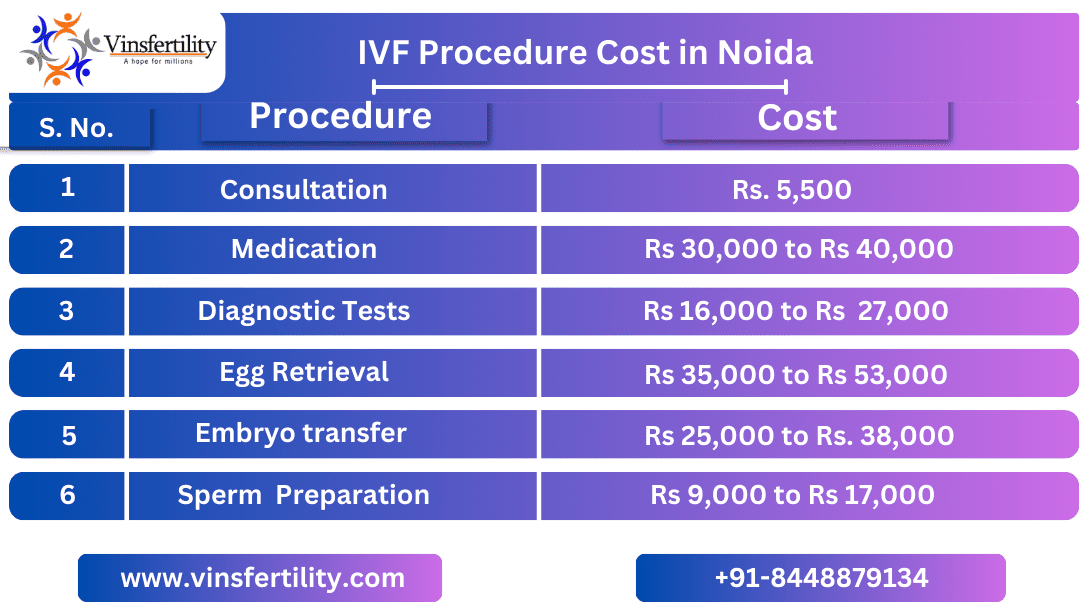
Understanding the total cost of IVF in Belgaum involves breaking down the process into its individual components. Each step, from initial consultations to advanced procedures, contributes to the overall expense. Below is a detailed explanation of typical costs associated with a full IVF cycle in 2026:
| Item | Estimated Range (₹) | Notes |
|---|---|---|
| Initial Consultation | 800–3,500 | Your first meeting with the fertility specialist, including a comprehensive review of your medical history, preliminary counselling, and discussion of treatment options. |
| Diagnostic Tests (Female) | 10,000–25,000 | Essential tests to assess female fertility, such as hormone assays (e.g., AMH, FSH, LH, Estradiol), thyroid function tests, prolactin levels, infection screenings (e.g., HIV, Hepatitis B & C, VDRL), and routine blood work (CBC, blood group). These help determine ovarian reserve and overall health. (Source: Mayo Clinic) |
| Diagnostic Tests (Male) | 4,000–10,000 | Includes semen analysis to evaluate sperm count, motility, and morphology. Hormonal tests (e.g., testosterone) and infection screenings may be conducted if indicated by initial findings. (Source: CDC) |
| Ultrasound Monitoring | 7,000–18,000 | Regular transvaginal ultrasounds are performed during the ovarian stimulation phase to monitor the growth and number of follicles (fluid-filled sacs containing eggs) and to assess the thickness and receptivity of the endometrial lining. |
| Ovarian Stimulation Drugs | 50,000–1,20,000 | These injectable medications stimulate the ovaries to produce multiple eggs. The cost varies significantly based on the type, dosage, duration of treatment, specific protocol used (e.g., antagonist, long agonist), and chosen brand of medication. Factors like age and ovarian response influence the required dosage. (Source: ACOG) |
| Egg Retrieval | 35,000–65,000 | A minor surgical procedure performed under light sedation or general anesthesia to collect mature eggs from the ovaries. This fee typically covers the procedure, anesthesia, and use of the operating theatre. (Source: Mayo Clinic) |
| Sperm Preparation | 6,000–12,000 | Involves processing the male partner's (or donor's) semen sample to isolate the healthiest, most motile sperm for fertilization. |
| Fertilisation (Standard IVF) | Included in base cycle | In traditional IVF, prepared sperm and eggs are placed together in a culture dish to allow natural fertilization to occur. This is often part of the basic package. |
| ICSI (Intracytoplasmic Sperm Injection) | 25,000–45,000 | An advanced fertilization technique where a single sperm is directly injected into each mature egg. It is recommended for severe male factor infertility, previous fertilization failure with standard IVF, or when using frozen sperm. |
| Embryo Culture | Included in base cycle | After fertilization, embryos are monitored and cultured in a laboratory for 3 to 5 days, often until they reach the blastocyst stage, before transfer or freezing. |
| Embryo Transfer | 30,000–50,000 | The procedure where one or more selected embryos are carefully placed into the woman's uterus using a thin catheter, typically without anesthesia. |
| Embryo Freezing (Cryopreservation) | 18,000–35,000 | The process of preserving any surplus viable embryos for future use. This allows for subsequent frozen embryo transfer (FET) cycles without undergoing another ovarian stimulation and egg retrieval. (Source: ACOG) |
| Embryo Storage (Annual) | 9,000–16,000 | A yearly fee for the cryostorage of frozen embryos in liquid nitrogen. |
| Frozen Embryo Transfer (FET) | 45,000–75,000 | A separate treatment cycle involving the thawing and transfer of previously frozen embryos. This cost typically includes medication for uterine preparation and the transfer procedure itself. |
Hidden Costs Most Clinics Don't Advertise Upfront
While clinics provide a base package cost, several additional expenses can arise during an IVF journey. Being aware of these potential "hidden costs" can help you budget more accurately:
- Advanced Diagnostic Tests: Beyond routine screenings, specialized tests like karyotyping (chromosome analysis), hysteroscopy (examining the uterus), endometrial receptivity array (ERA), or sperm DNA fragmentation tests may be recommended for specific cases. These are typically not included in the standard package. (Source: Mayo Clinic)
- Post-Transfer Medications: After embryo transfer, women often require progesterone and other hormonal support for several weeks to help maintain the uterine lining and support early pregnancy. These medications are a significant ongoing cost.
- Anesthesia for Additional Minor Procedures: If additional procedures like a mock embryo transfer or a hysteroscopy are required, separate anesthesia charges may apply.
- Blastocyst Culture Surcharges: While embryo culture to the blastocyst stage (Day 5/6) is often standard, some clinics might charge extra if it's considered an "advanced" service compared to Day 3 transfers.
- PGT/PGD Costs Per Embryo: Preimplantation Genetic Testing (PGT), including PGT-A (aneuploidy screening), PGT-M (monogenic disorders), or PGT-SR (structural rearrangements), involves biopsying embryos and sending them for genetic analysis. This is a significant add-on cost, charged per embryo tested. (Source: ACOG)
- Extended Counselling Sessions: While initial counselling is usually included, ongoing psychological support or extended sessions with a counsellor or fertility coach might incur additional fees.
- Donor Sourcing, Legal, and Screening Fees: If donor eggs, sperm, or embryos are required, the costs associated with donor recruitment, screening, compensation, and legal agreements are separate and substantial.
- Emergency Management Costs: While rare, complications like Ovarian Hyperstimulation Syndrome (OHSS) might require hospitalization and additional medical care, leading to unforeseen expenses. (Source: ACOG)
- Travel and Stay Costs: If specific diagnostic tests or advanced procedures are only available at a clinic outside Belgaum, or if you travel for treatment, accommodation and travel expenses will add to the overall cost.
- Follow-up Pregnancy Tests and Early Scans: The cost of blood tests to confirm pregnancy (beta-hCG) and early ultrasound scans to check for viability and number of fetuses after a successful transfer are usually not part of the IVF package.
How Do Age and Ovarian Response Affect IVF Medication Costs?
The cost of ovarian stimulation medications is one of the most variable components of an IVF cycle. This wide range is primarily influenced by several individual factors:
- Age: Older women generally require higher doses of gonadotropins to stimulate adequate follicular growth due to declining ovarian reserve.
- Ovarian Reserve: This is assessed by Anti-Müllerian Hormone (AMH) levels, Follicle-Stimulating Hormone (FSH) levels, and Antral Follicle Count (AFC). Women with lower ovarian reserve or poor response in previous cycles may need higher dosages or different protocols.
- Treatment Protocol: Different IVF protocols (e.g., long agonist, short antagonist, mild stimulation) use varying types and quantities of medications. Antagonist protocols, for instance, might involve fewer days of injections compared to long protocols.
- Diagnosis: Conditions like Polycystic Ovary Syndrome (PCOS) may require careful, lower-dose stimulation to prevent OHSS, while others might need more aggressive approaches.
- Drug Brand and Type: There are various brands of gonadotropins and other fertility drugs available, and their pricing can differ. Your doctor will choose the most appropriate regimen for your specific needs.
Your fertility specialist will tailor the medication protocol based on your unique profile to optimize egg production while minimizing risks, directly impacting the total medication expenditure.
How Do Different IVF Treatment Types (Conventional, ICSI, Mini-IVF) Affect Costs?
The overall cost of an IVF cycle in Belgaum significantly depends on the specific type of assisted reproductive technology (ART) protocol chosen. Each approach is designed for different fertility challenges and thus carries a distinct price point due to varying procedures, medications, and laboratory requirements.
| Procedure | Estimated Price Range (₹) | Best Suited For |
|---|---|---|
| Conventional IVF | 1,20,000–2,50,000 | Couples with unexplained infertility, mild male factor infertility, tubal blockage, or ovulation disorders. Involves placing prepared sperm and eggs in a culture dish for natural fertilization. |
| IVF with ICSI | 1,80,000–3,00,000 | Primarily recommended for severe male factor infertility (e.g., very low sperm count, poor motility, abnormal morphology), previous fertilization failure with standard IVF, or when using surgically retrieved or frozen sperm. (Source: ACOG) |
| Mini-IVF (Minimal Stimulation IVF) | 90,000–1,80,000 | Suited for women with good ovarian reserve, those at high risk of Ovarian Hyperstimulation Syndrome (OHSS), or individuals preferring a milder stimulation approach with fewer medications. It aims to produce a smaller number of high-quality eggs. |
When ICSI is Medically Justified vs. Potentially Upsold
Intracytoplasmic Sperm Injection (ICSI) is an advanced laboratory procedure where a single, healthy sperm is directly injected into the center of each mature egg. It bypasses many of the steps of natural fertilization and is a powerful tool when medically indicated.
ICSI is medically justified in specific scenarios, including:
- Severe Male Factor Infertility: Conditions such as very low sperm count (oligozoospermia), poor sperm motility (asthenozoospermia), or abnormal sperm shape (teratozoospermia).
- Previous Fertilization Failure: If a couple has undergone conventional IVF and experienced no or very low fertilization rates.
- Surgically Retrieved Sperm: When sperm is obtained directly from the testes or epididymis (e.g., TESE, PESA) due to obstructive azoospermia.
- Use of Frozen Sperm: Especially if the sperm sample is limited or of lower quality after thawing.
- Preimplantation Genetic Testing (PGT): Some clinics prefer ICSI to minimize contamination of the embryo biopsy with extraneous sperm DNA.
However, if ICSI is recommended without a clear medical indication, such as unexplained infertility or mild female factor issues, couples should engage in an open discussion with their fertility specialist. It's crucial to understand the rationale behind the recommendation, as some clinics may offer ICSI routinely as an add-on, which can increase the overall cost without necessarily improving outcomes for all patients. Always seek clarity and ensure the treatment aligns with your specific diagnosis. (Source: Mayo Clinic)
Sources & References
- The Surrogacy (Regulation) Act, 2021 — Government of India
- Indian Council of Medical Research (ICMR) — National ART & Surrogacy Registry
- NABL — National Accreditation Board for Testing and Calibration Laboratories
- World Health Organization (WHO) — Infertility clinical guidance
- PubMed — Peer-reviewed fertility research (NIH/NLM)
All external sources link to primary government, medical, or peer-reviewed material. This article is reviewed by a qualified fertility specialist and updated as clinical guidance changes.